
A family calendar works when there’s exactly one of it, it hangs where everyone walks past, each person’s plans are easy to tell apart, and someone checks it with the family once a week. The format matters less than the habit; a printed month on the fridge that everyone reads beats a perfect app that only one parent opens.
Here’s how to set one up, what to put on it, and ideas that keep the whole household using it.
How to set up a family calendar

1. Choose one calendar and one place
Two calendars means neither is right. Pick a single shared calendar and hang it where the family passes every day: the fridge, the kitchen wall, by the front door. Hang it low enough for children to read it.
2. Pick a layout that fits your family
- One month per page gives each day enough room for two or three entries. This suits most families.
- Two or four months per page helps with looking ahead to holidays and term dates, but leaves little room to write.
- A whole year on one page is good for birthdays, trips and school holidays, alongside a monthly calendar.
Landscape pages give wider day boxes for writing; portrait fits narrow spaces like the side of a fridge.
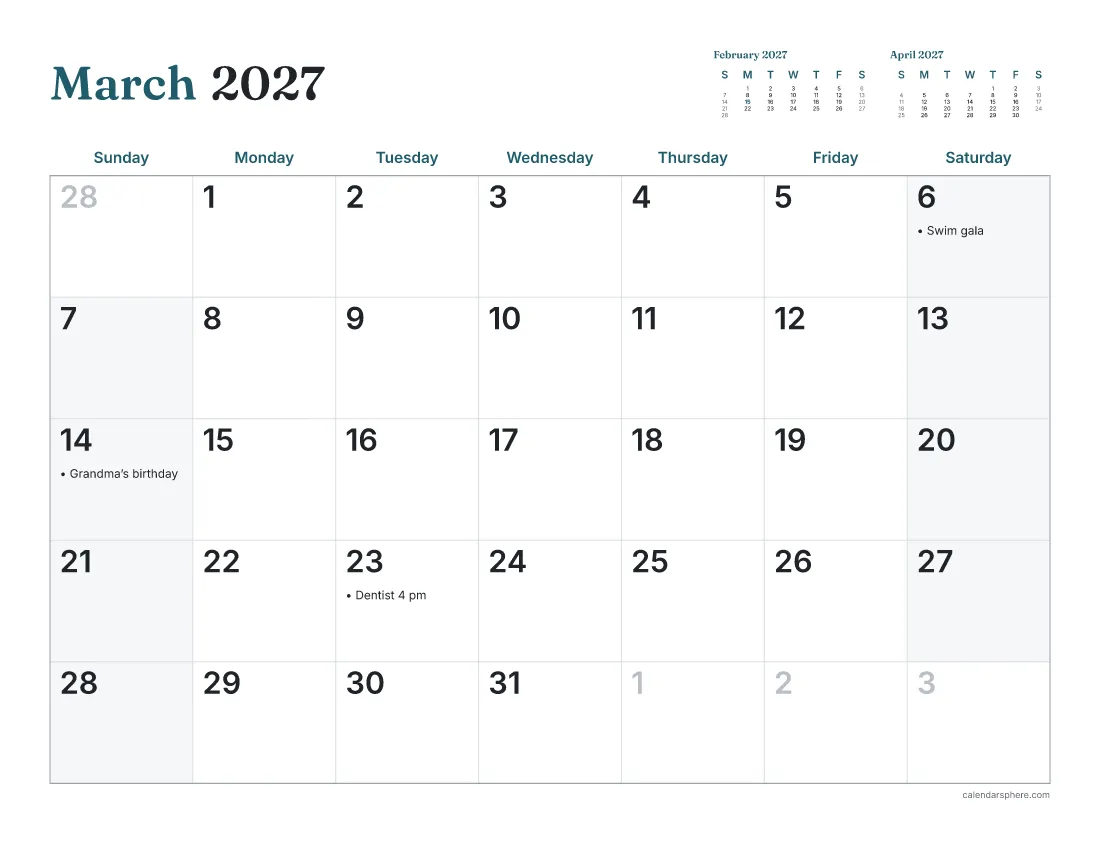
3. Give each person a color
Assign one pen color per person, plus one for whole-family events. A child who can’t read yet can still find “their” color. If colors feel like too much, start each entry with an initial: “M: dentist 4 pm”.
4. Write in the fixed dates first
Before the month starts, add everything already known: birthdays, public holidays, school closures and term dates, regular activities, bin and recycling days, bill due dates. Birthdays and holidays are worth adding before you print, so they come out neatly.
5. Hold a weekly check-in
Five minutes, same day every week (Sunday evening works for many families). Go through the coming week: who needs to be where, who’s driving, what needs buying or signing. This is where a calendar turns into a plan; how to plan your week has a fuller routine for the adults.
6. Make it the rule
The rule that makes a family calendar work: if it’s not on the calendar, it isn’t agreed. A sleepover, a lift, a late meeting: write it down first.
Family calendar ideas that keep everyone using it

- Put a pen on a string. If writing something down takes searching for a pen, it won’t happen.
- Let children write their own events. Ownership makes them check it. Younger children can add stickers for their activities.
- Add a countdown. Circle a birthday or holiday and let a child cross off each day until it arrives.
- Mark “no plans” days. Writing “Family day” or “Nothing!” on a Saturday protects it.
- Show meals on busy nights. A note like “Slow cooker” or “Leftovers” on a late-practice day saves a conversation.
- Keep chores separate. A chore chart next to the calendar handles the daily jobs, so the calendar stays for events.
- Start the month together. Hang the new page as a family and let everyone add their plans.
What to put on a family calendar
| Put on the calendar | Keep somewhere else |
|---|---|
| School events, closures and term dates | Daily homework |
| Appointments (doctor, dentist, haircut) | Shopping lists |
| Activities and practices with times | Everyday chores |
| Birthdays and parties (with gift reminders) | Long notes and addresses |
| Visitors, trips and days off | Passwords and personal details |
| Bin days, bill dates and renewals | Ideas you haven’t agreed yet |
A good test: if an entry affects more than one person, needs a lift, or needs money or preparation, it goes on the calendar.
The school year and the summer


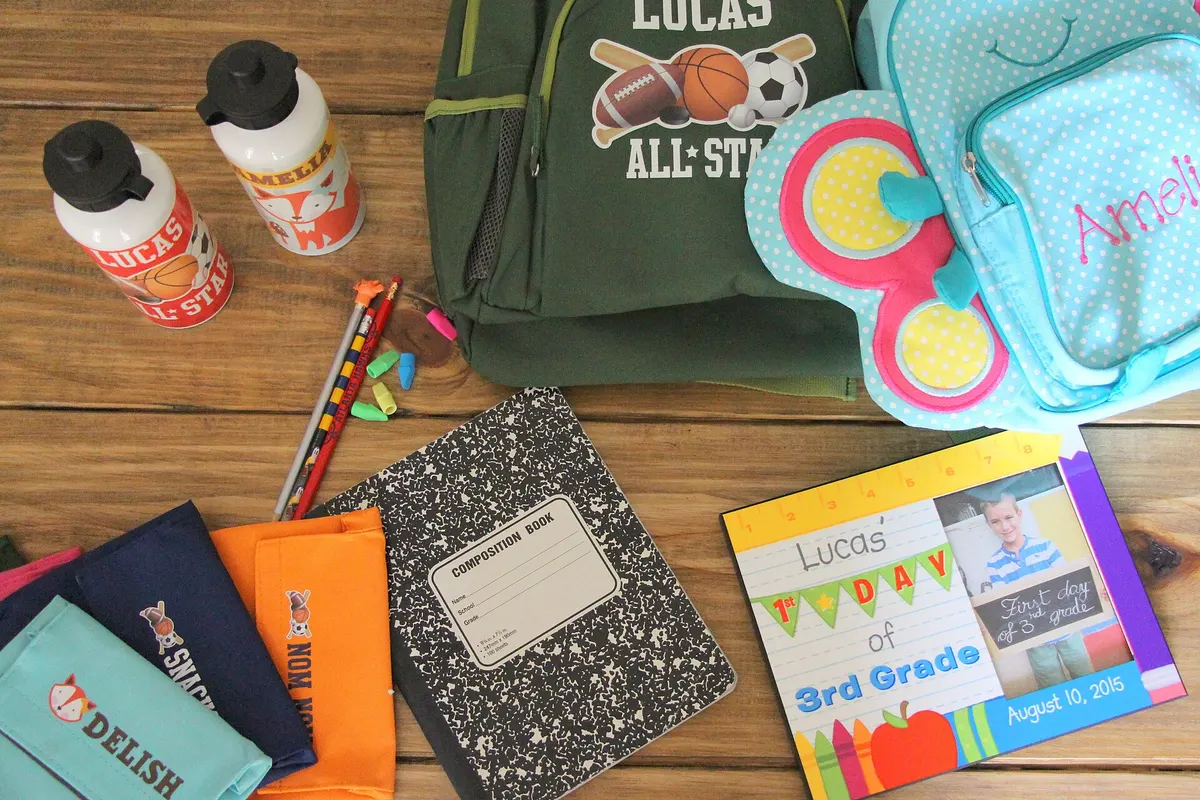
The two busiest times for a family calendar are the start of the school year and the summer holidays. Before school starts, add term dates, parent evenings, picture day and the first activity sessions; the back-to-school checklist covers what else to sort out. A school year calendar runs from the month your school starts, which keeps the whole year on one page. In summer, when days lose their structure, a simple daily rhythm helps; see a summer schedule for kids.
Common family calendar mistakes
- Keeping two calendars. One on the fridge and one in a phone drift apart within a week.
- Hanging it where only adults go. A calendar in the home office is a work calendar.
- Writing too small. If entries can’t be read from a step away, use a bigger day box or fewer months per page.
- Skipping the check-in. The calendar records plans; the weekly chat makes them happen.
- Waiting until the month starts. Print and fill in next month’s page a week early.
Print your family calendar

The calendar maker prints a free calendar for the months you need, one, two, four or twelve months per page, on Letter or A4, starting on Sunday or Monday. Add public holidays for your country and type in your own events (birthdays, school dates, trips) by tapping a day; they print on the calendar and stay in your browser. Need just one month? Each monthly page, such as the January 2027 calendar, prints that month with the same options.
Frequently asked questions
Where should a family calendar go?
Somewhere everyone passes every day, at eye level for the youngest reader: the fridge, the kitchen wall or beside the front door. A calendar in a drawer or a bedroom stops being shared.
How do I color-code a family calendar?
Give each person one pen color and use it for everything that involves them, with a shared color for whole-family events. If you don’t want to buy pens, a first initial before each entry works just as well.
Should a family calendar be monthly or weekly?
Use a month on the wall so everyone sees what’s coming, and a weekly plan for the detail of who drives where. Most families find the monthly view is the one children actually read.
How do we keep the family calendar up to date?
Hold a five-minute check-in on the same day each week, and make a house rule that nothing is agreed until it’s on the calendar.
Can I print a family calendar with holidays already on it?
Yes. The CalendarSphere calendar maker adds public holidays for the US, UK, Canada, Australia or India, and you can type in your own events, such as birthdays, before you print.
What should go on a family calendar?
Anything that affects more than one person or needs a lift, money or preparation: school events and term dates, appointments, activities, birthdays, visitors, trips, bin days and bill dates.