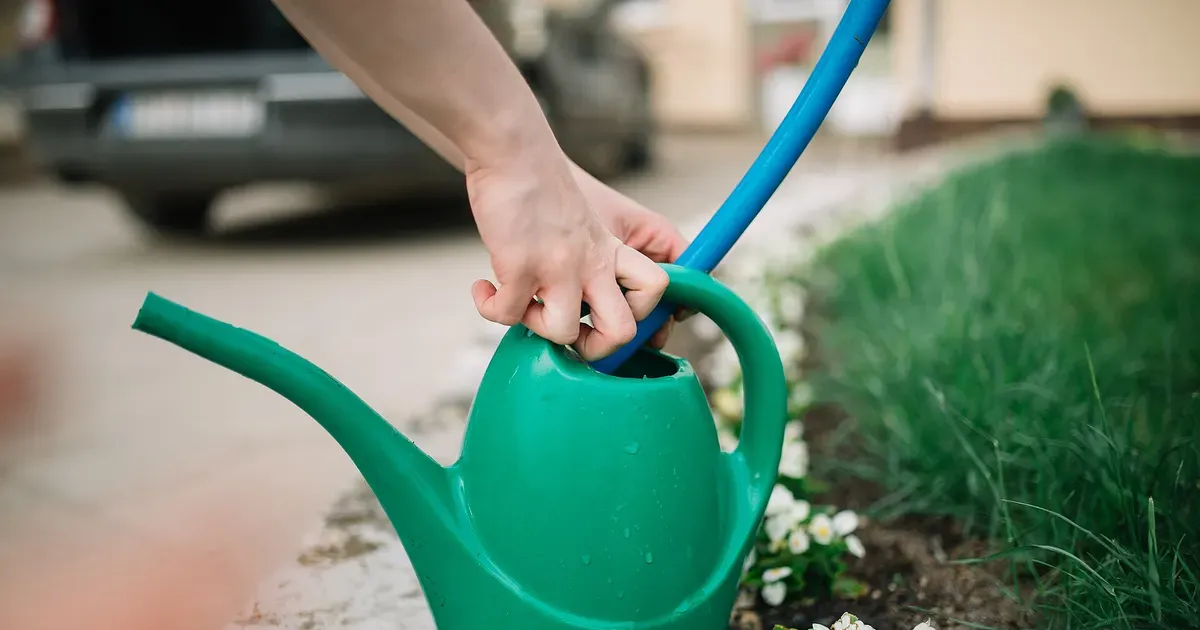
Age appropriate chores are jobs a child can do safely and mostly on their own: tidying toys and feeding a pet at 3 to 5, making the bed and setting the table at 6 to 8, and vacuuming, laundry and simple cooking from 9 to 12. The lists below are a starting point; your own child, your home and your rules decide the rest.
Children who help at home learn that a household runs on small, regular jobs. The aim is not a spotless house but a habit: the same few jobs, done most days, with less reminding over time.
Age appropriate chores by age
Each age group can do everything in the groups before it, so the lists build on each other. Treat the ages as a guide, not a test.
Ages 3 to 4
Toddlers and preschoolers love to copy adults. Keep jobs to one step and do them alongside your child.
- Put toys back in a box or basket
- Put dirty clothes in the laundry basket
- Carry their own plate and cup to the counter
- Wipe up small spills with a cloth
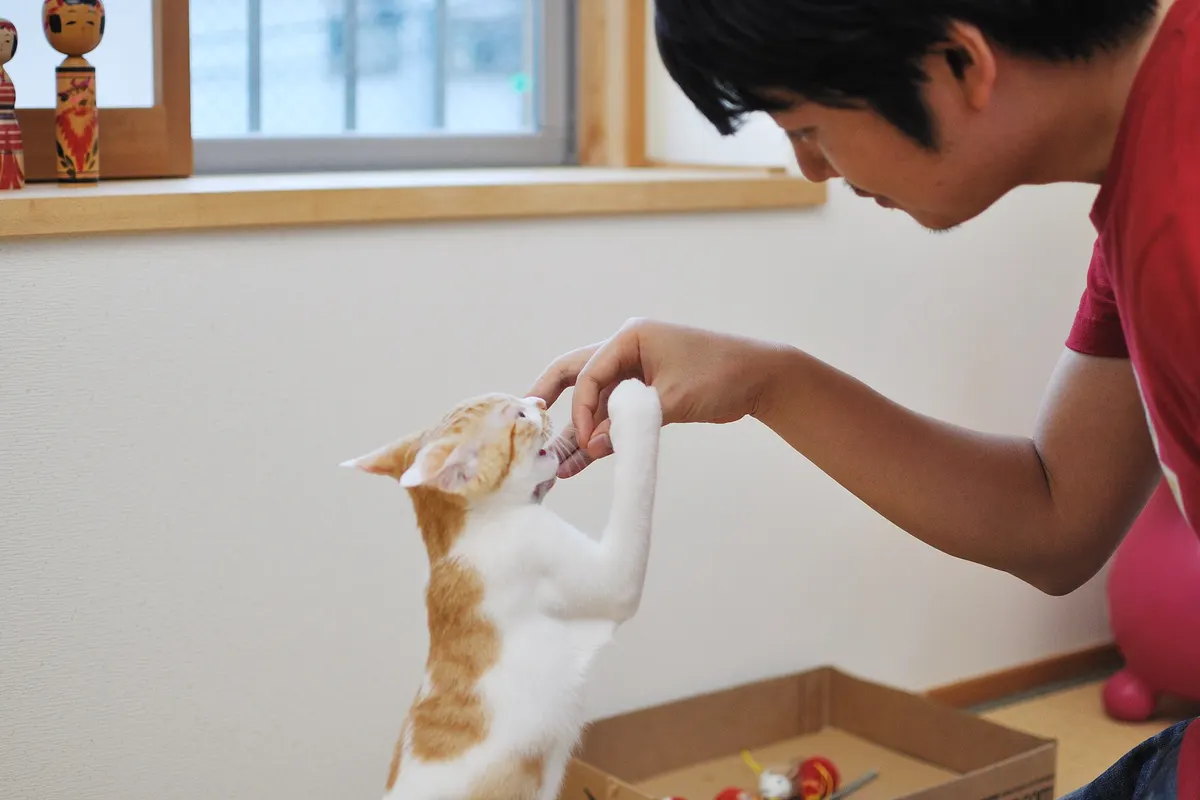
- Help feed a pet (you measure, they pour)
- Put books back on a low shelf
- Match socks from the clean washing
Ages 5 to 6
Now children can follow two or three steps and remember a short routine.
- Make their bed (a duvet pulled straight counts)
- Set and clear the table
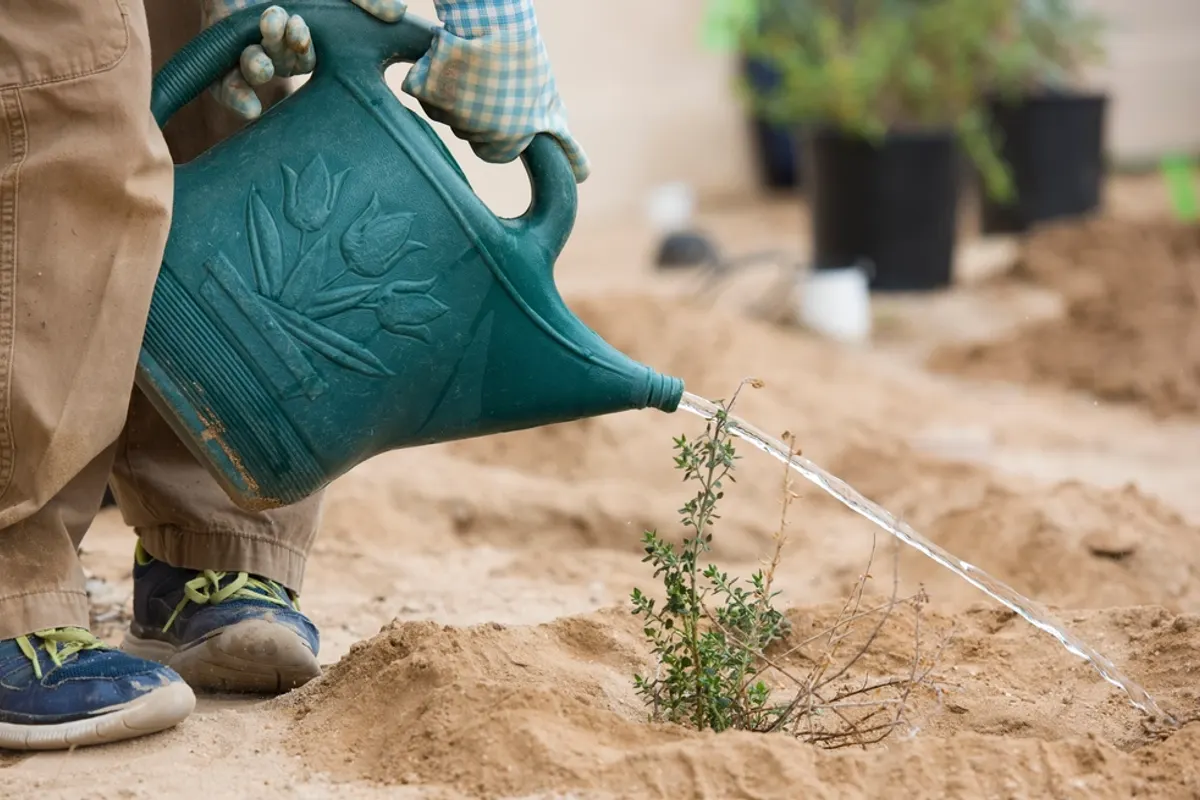
- Water plants
- Sort laundry into lights and darks
- Put away their own clean clothes
- Pack their school bag the night before
- Help put the shopping away
Ages 7 to 8
At this age many children can do a job from start to finish without you watching.
- Feed pets on their own
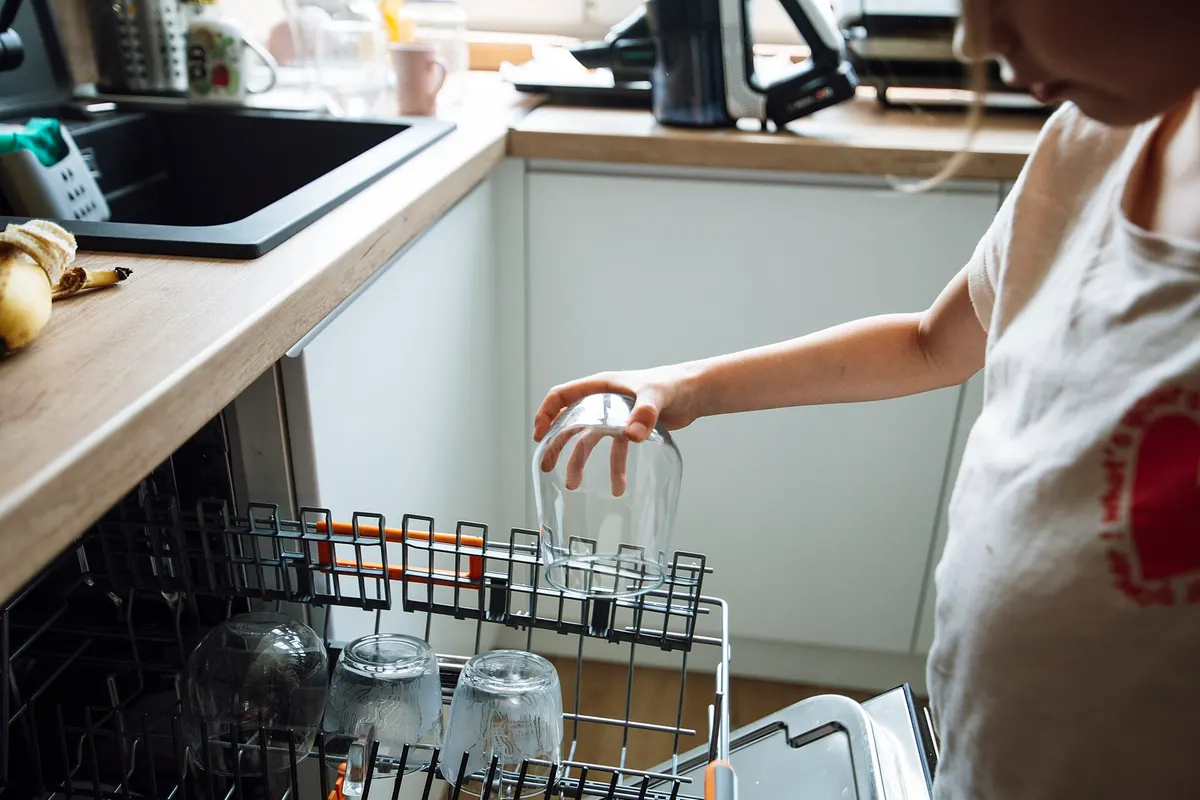
- Empty the dishwasher (sharp knives left for an adult)
- Fold towels and simple clothes
- Sweep the kitchen floor
- Take out the recycling
- Tidy their bedroom fully, including the floor
- Make a simple breakfast such as cereal or toast
Ages 9 to 10
Children of this age can take on jobs that need some care and a bit of time.
- Vacuum a room
- Load the dishwasher
- Clean the bathroom sink and mirror
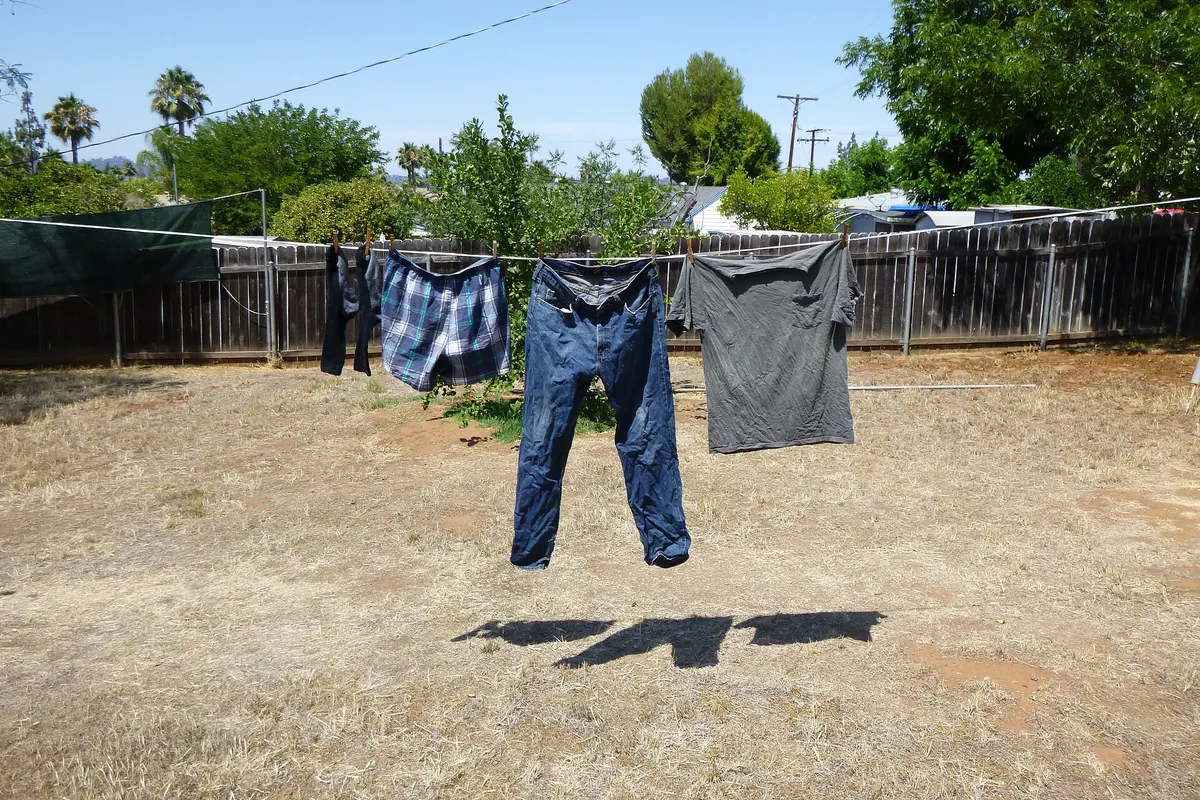
- Hang out or put away washing
- Help plan and make a packed lunch
- Weed a patch of garden
- Change their own bed sheets with a little help
Ages 11 to 12
Older primary children can handle most everyday household jobs, with safety rules agreed first.
- Run the washing machine and dryer
- Cook a simple meal with an adult in the house
- Clean the bathroom, including the toilet
- Mow the lawn, if you are happy with the mower
- Look after a younger sibling for short periods while you are home
- Write the shopping list from what has run out
How many chores to give
Start with fewer jobs than you think. Two or three daily chores are plenty for a young child; four to six suit older children. Add one bigger weekly job, such as vacuuming on Saturday, once the daily ones are routine.
A good mix has:
- Self-care jobs: making the bed, packing a bag, putting clothes away.
- Family jobs: setting the table, feeding the pet, emptying the dishwasher.
- One stretch job: something new, shown a few times before they do it alone.
Change the list every few months. When a job is easy and automatic, swap it for the next one on the list for their age.
How to teach a new chore
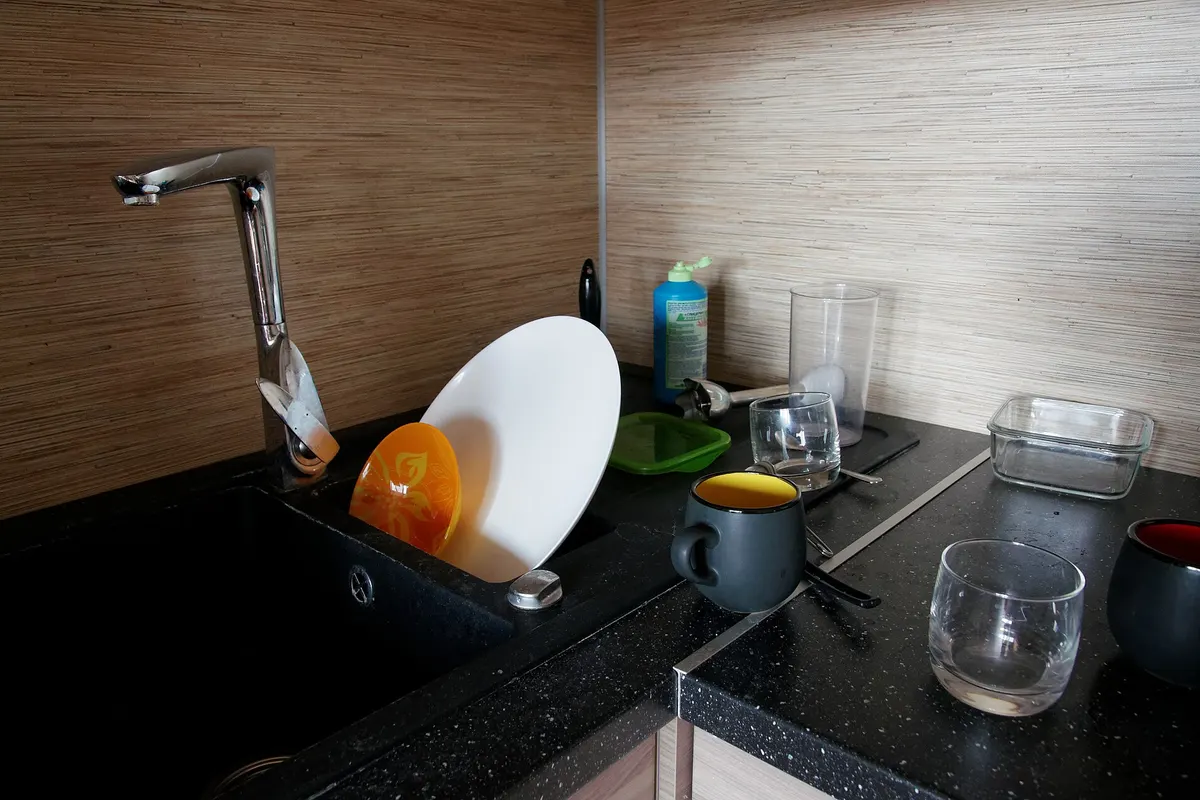
Children often refuse jobs they don’t yet know how to do. Teach each one in four short steps:
- Do it while they watch, saying each step out loud.
- Do it together, letting them take the steps they can.
- Let them do it while you watch, and help only if they ask.
- Let them do it alone, and check afterwards.
Agree what “done” means. “Tidy your room” is vague; “toys in the box, clothes in the basket, books on the shelf” is clear and easy to check.
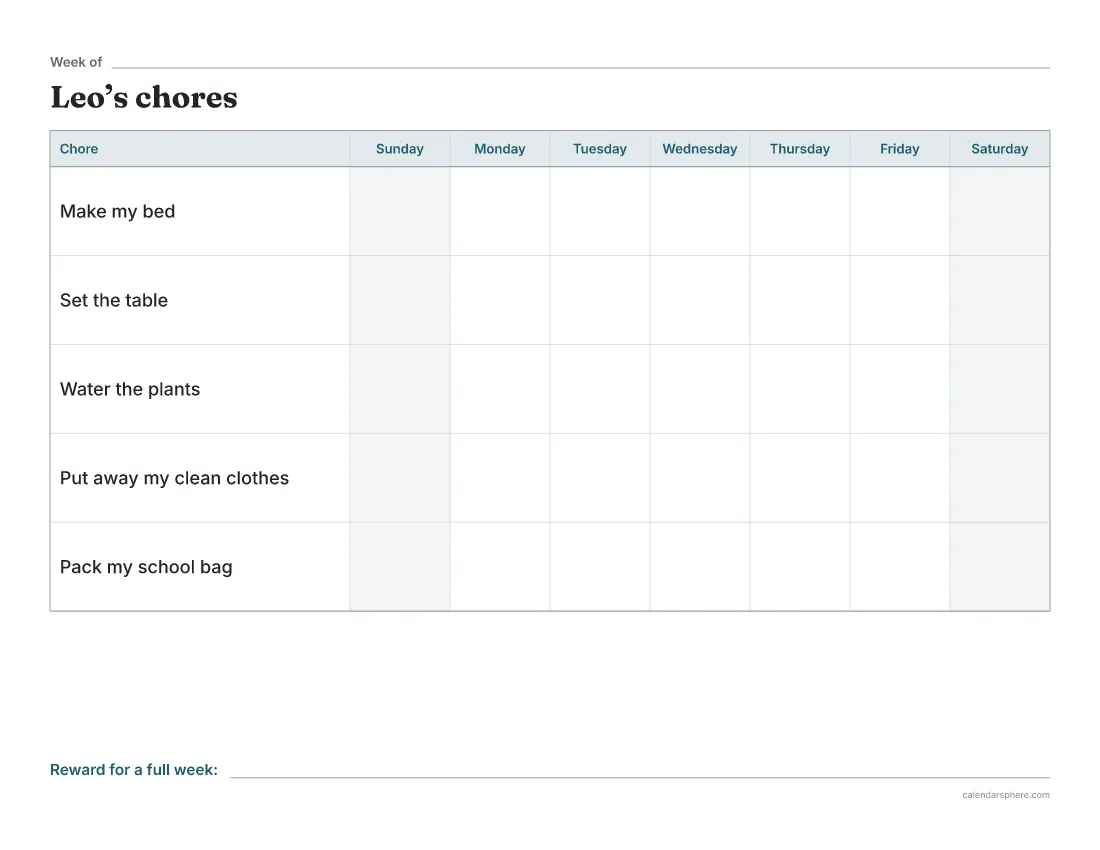
Written on the chart, those three parts become the job itself, so “done” is never in doubt.
Track chores on a chart
A chart turns chores from a request into a routine. Your child can see the list, tick each job and watch the week fill up, and you no longer have to remember who did what.

The printable chore chart takes your child’s name and up to 15 chores, with a box for every day of the week. Weekends are shaded, so you can see at a glance which days have school-day jobs, and the week can start on Sunday or Monday. Fewer chores give bigger boxes, which is handy if your child likes stickers.
Some tips that make a chart last:
- Put it where the jobs happen, such as the fridge or the back of the bedroom door.
- Let your child tick the boxes. Ticking is part of the satisfaction.
- Review it on Sunday. Count the ticks together and talk about what went well.
- Print a fresh one each week, so a bad week doesn’t spoil the next.
Chores and rewards
Many families keep everyday jobs unpaid, because everyone who lives in a home helps run it, and reward extra effort instead. A reward chart works well for one specific habit you want to build, such as “feeds the dog without being asked”. Each time it happens, your child fills a star; when the chart is full, they get the reward you agreed.
How to use a reward chart covers choosing the goal, how many spaces to use and how to phase the chart out once the habit sticks.
Fit chores around the rest of the day
Chores work best at the same point each day: setting the table before dinner, packing a bag after homework, making the bed before breakfast. If evenings are busy, a short homework routine for kids can include one or two jobs straight after homework is done. In the holidays, when days are less structured, a summer schedule for kids can give chores a fixed morning slot.

Make your child’s chore chart
Pick two to six jobs from your child’s age group, write them in plain words they can read, and print the week. The chore chart maker puts their name at the top and a box for every chore on every day, ready for ticks, colours or stickers.
Frequently asked questions
What chores can a 3-year-old do?
Simple one-step jobs with you nearby: putting toys in a box, putting dirty clothes in the laundry basket, wiping up a small spill and carrying their plate to the counter.
How many chores should a child have?
A common starting point is two or three daily jobs for under-6s and four to six for older children, plus one bigger weekly job from about age 8. Start small and add one at a time.
Should children be paid for chores?
Families differ. Many keep everyday jobs such as making the bed unpaid, because everyone helps at home, and offer pocket money or a reward only for extra jobs like washing the car.
At what age can a child do their own laundry?
Many children can sort clothes by colour at 5 or 6 and fold towels soon after. Running the washing machine on their own usually comes around 10 to 12, once they have been shown a few times.
How do I get my child to do chores without nagging?
Make the jobs visible and predictable. A chart on the fridge with a box for each day lets your child check what is left, so you can point to the chart instead of repeating yourself.
Are these ages strict rules?
No. They are a rough guide. Children grow at different rates, so start with what your child can do safely and confidently, and move on when a job becomes easy.